
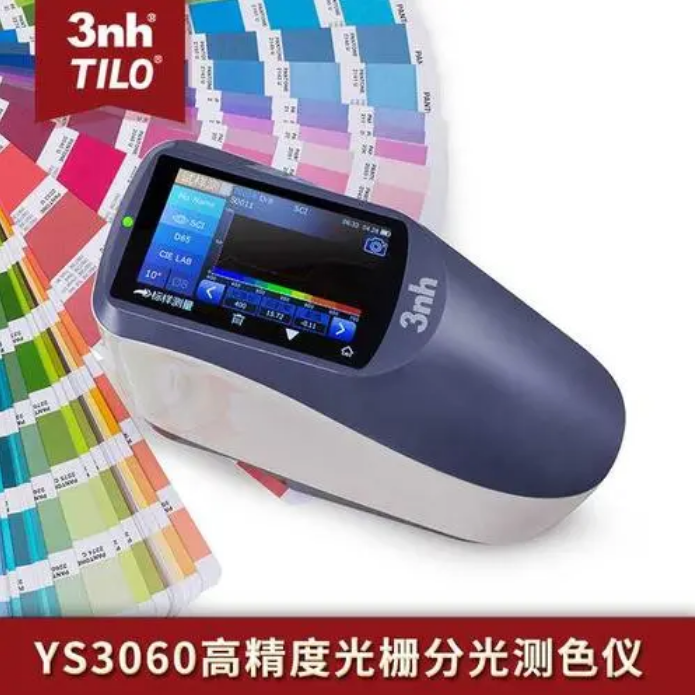
A spectrophotometer is a device that measures color by analyzing the reflection and transmission of light, providing accurate color measurement results. The Pantone color card is a widely used color standard system with a wide range of colors, including millions of different colors.
The steps for measuring the Pantone Lab color value using the spectrophotometer YS3060 are as follows:
- Prepare the following tools and materials: Spectrophotometer YS3060, Pantone color cards, color standard white board (or white paper), and a precise pedometer (for measuring the distance and angle of the color cards).
- Set up the spectrophotometer: Place a colorimetric standard white board (or white paper) in front of the instrument and adjust the instrument to ensure that the distance and angle between the instrument and the white board are correct.
- Position the Pantone color card: Select the Pantone color card to be measured and place it on the same plane as the color measurement standard white card, ensuring that the color card is completely captured by the instrument.
- Start measurement: Turn on the instrument and select the “Measure Pantone Color Card” option. The instrument will automatically scan the Pantone color card and record the reflection and transmission spectra of each color.
- Analysis results: The instrument will calculate the Lab value of each color based on the reflection and transmission spectra of the Pantone color card and display these values on the instrument’s display.
- Record data: Use an accurate pedometer to record the distance and angle information of each color, as well as the corresponding Lab value. This data can be used for future color matching and color analysis.
- Calibrate your instrument: If you need more accurate results, you may need to calibrate your instrument regularly. Calibration can be performed using a standard sample of known accurate color to ensure that the instrument provides the most accurate results when measuring Pantone color charts.
Notes:
- Make sure the instrument and Pantone color card are clean and dry to avoid affecting the measurement results.
- During the measurement process, avoid unnecessary interference and light changes to maintain measurement consistency.
- When recording data, ensure that the pedometer stride length is set accurately to avoid data errors.
- Calibrate and maintain the instrument regularly to ensure its long-term accuracy.
In summary: Measuring the Lab values of Pantone color charts using the YS3060 spectrophotometer is a relatively simple but precise process. By following the above steps and using the appropriate tools and materials, accurate color measurement results can be obtained. This is of great significance in areas such as color matching, color analysis, and product quality control.
YS3060 Application Industry
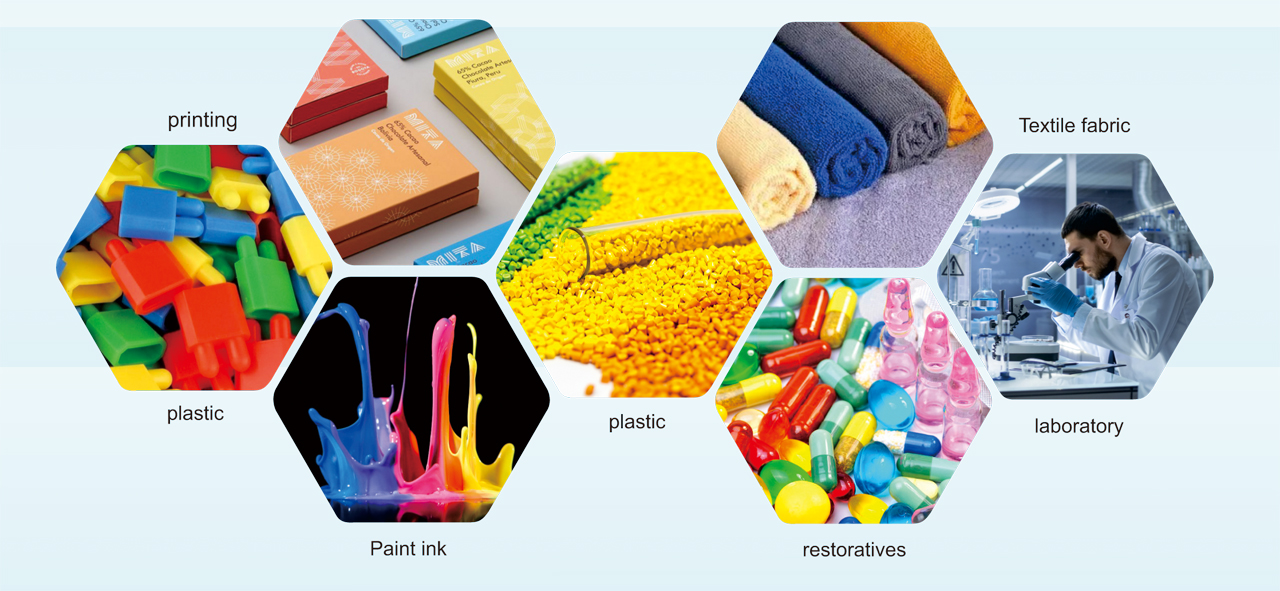
3nh handheld spectrophotometer can easily achieve color transferring , and be used as a precision instrument for color matching system. It’s widely used in plastics, electronics, painting, ink, textile and garment, printing and dyeing, printing paper, automotive, medical, cosmetics and food industries, scientific research institutes, schools and laboratories.
Features of YS3060
The YS3060 is a practical spectrophotometer widely used in color detection scenarios such as industrial quality control and medical color assessment (e.g., gum color testing). Its core features mainly focus on measurement accuracy, operational convenience, scenario adaptability, and data management capabilities, specifically as follows:
- High-Precision Color Measurement Performance
- Equipped with a high-sensitivity optical sensor and advanced spectral analysis algorithm, it can accurately capture the reflection or transmission light data of samples. The repeatability of chromaticity values (ΔE*ab) is controlled within a low range (typically ≤0.01), ensuring consistent and reliable measurement results.
- Supports multi-band spectral detection (covering visible light bands, and some models extend to near-ultraviolet), which can accurately calculate color parameters such as tristimulus values (X, Y, Z), color difference values (ΔEab, ΔEcmc), and hue, meeting the strict color evaluation standards of different industries.
- User-Friendly Operation Design
- Adopts an intuitive touchscreen interface with clear function buttons (e.g., “Test”, “Print”, “Menu”) and simple operation logic. Even non-professional operators can master the basic measurement process after short-term training.
- Built-in imaging positioning function: Before measurement, press the “Print” key to activate the camera for real-time view finding, helping to align the sample with the test hole accurately and avoid light leakage that may affect results.
- Supports one-key black-and-white calibration: The calibration process is simplified, and users only need to follow the prompt steps to complete calibration quickly, ensuring the long-term accuracy of the instrument.
- Strong Sample and Scenario Adaptability
- Features a flexible measurement structure, compatible with flat, small-sized, or irregular samples (e.g., coatings, plastics, biological tissues like gums). It can also be equipped with different-caliber probes (optional accessories) to adapt to samples of varying sizes.
- Has automatic temperature and humidity compensation function, which reduces the impact of environmental changes (such as temperature fluctuations in factory workshops, humidity changes in laboratories) on measurement data, ensuring stable performance in multiple scenarios.
- Efficient Data Management and Output
- Supports on-device data storage: It can save multiple groups of standard sample and test sample data, facilitating on-site comparison and review.
- Provides multiple data output methods: Data can be transmitted to computers or mobile devices via USB or Bluetooth (for some models), and can also directly print measurement reports through a connected printer, meeting the needs of industrial production record management and quality traceability.
Would you like me to further sort out a YS3060 Feature Comparison Table (comparing it with common spectrophotometers like MS3003 in terms of “measurement accuracy”, “operation difficulty”, and “applicable scenarios”) to help you better understand its advantages?
